Social Space and Cultural Attitudes: Sociodemographic and Ideological Factors in the Debate over Cultural Legitimism and Populism
Espacio social y actitudes hacia la cultura: afinidades entre factores sociodemográficos, ideológicos y el debate legitimismo versus populismo cultural
Joaquim Rius-Ulldemolins
|
Key words Discourses on Culture
|
Abstract Discourses defending or criticizing the cultural sphere have long been central to public debate, addressing its civilizing role in national cultures and the tension between cultural elitism and populism. Since the work of Pierre Bourdieu, these opposing positions have generally been interpreted as reflections of individuals’ positions in social space, the volume of capital they possess and especially the composition of that capital. This article examines this phenomenon in Spain using survey data from the Centro de Investigaciones Sociológicas (CIS) to analyze the relationship between social position, ideology and attitudes toward culture. The findings highlight the need to revisit Bourdieu’s framework by emphasizing the polarization between legitimist and populist discourses, as well as the association of the latter with far-right positions. |
|
Palabras clave Concepciones de la cultura
|
Resumen Los discursos de adhesión o crítica a la esfera cultural han conformado uno de los ejes del debate público, que aborda su concepción civilizatoria frente a las culturas nacionales o la disputa entre elitismo y populismo cultural. Asimismo, desde la aportación de Pierre Bourdieu estas oposiciones se han interpretado como producto de la posición en el espacio social, el volumen de capital y, especialmente, la composición de capitales. Sin embargo, este artículo se propone examinar este fenómeno en España a partir de una encuesta del CIS, analizando la relación entre el espacio social, ideología y las actitudes hacia la cultura. Así, se plantea la necesidad de revisar el esquema bourdiniano y destacar la polarización entre discursos legitimistas y populistas, y la asociación de estos últimos con posiciones de extrema derecha. |
Citation
Rius-Ulldemolins, Joaquim (2026). «Social Space and Cultural Attitudes: Sociodemographic and Ideological Factors in the Debate over Cultural Legitimism and Populism». Revista Española de Investigaciones Sociológicas, 195: 79-102. (doi: 10.5477/cis/reis.195.79-102)
Joaquim Rius-Ulldemolins: Universitat de València | joaquim.rius@uv.es
Introduction
The debate over culture and the space of social positions began at the onset of Modernity, in the 18th and 19th centuries, with the opposition between the civilizing conception of culture and culture as the spirit of the people (Elías, 2010). It has continued throughout the 20th century and even to the present day (Cuche, 1999). Pierre Bourdieu’s work Distinction has been highly influential in interpreting this debate as a product of the sociogenesis of a relatively autonomous cultural field and the logic of social differentiation regarding the mastery (or lack thereof) of the codes that it produces. His central thesis can be summarized as the relationship between an individual’s position in social space, the volume and type of capital they possess (economic or cultural), and, through habitus, their political orientation and disposition toward culture (Coulangeon and Duval, 2013; Mauger, 2023). This thesis has strongly shaped contemporary understanding of this debate. In the 21st century, however, these attitudes towards culture, which can be summarized as the acceptance of cultural legitimism and the symbolic violence they entail, have been reinforced by cultural globalization, postmodern dynamics, and the increased openness and individualization of cultural consumption. These attitudes are often conceptualized in terms such as cultural omnivorousness, observed to a varying degree in advanced countries (Fernández and Heikkilä, 2011; Peterson and Kern, 1996). Without delving into the details of this issue, several studies have continued to observe a persistent association between social position and distinct types of cultural behavior (Bennett et al., 2009; Chan and Goldthorpe, 2007; O’Brien and Ianni, 2023). On the other hand, the relationship between attitudes towards culture has been much less studied, particularly hostile attitudes in the 21st century, a period in which a new form of cultural populism has emerged. This populism is associated with social expectations of advancement outside or against established educational and cultural institutions (Beaumont, Challier and Lejeune, 2018; Halle, 1993). It has been leveraged by the extreme right to undermine the influence of cultural elites.
From a sociological perspective, the debate over culture has been examined, particularly regarding its most avant-garde manifestations, which tend to clash with traditional conceptions of art. This is the case in the study conducted by French sociologist Nathalie Heinich, which analyzes the reactions of the French public to contemporary art, especially in cases generating intense public controversy during the mid-1980s, such as the wrapping of the Pont-Neuf in Paris in 1985 by Christo (Heinich, 1997). In this study, a qualitative approach was followed, focusing on the conflict between inherent innovation in art and the public’s expectations of what art should be. The work collected the reactions of individuals who felt disappointed, offended or misled, as well as their distance from the institutions that promote and value contemporary art (ibid.). Other authors have conducted qualitative studies on the use of art in home decoration and the discourses surrounding it (Halle, 1993). Beyond these qualitative studies, or others examining attitudes toward cultural funding (Rius-Ulldemolins, Rubio-Arostegui, and Rius-Ulldemolins, 2023), little research exists on current discourses about culture and favorable or critical attitudes generated by the same. In this regard, CIS Survey 3476, conducted in 2024 (CIS, 2024), provides a notable example.
This analysis identifies the structuring dimensions of positions towards culture, measured using a set of seven questions with ordinal responses that indicate the degree of agreement or disagreement with each statement. It examines their associations with sociodemographic (sex, age, place of residence, income, occupation and studies) and ideological (ideological positioning, voting and religiosity) factors. Second, individuals are classified using a two-stage clustering procedure, resulting in eight clusters. The cluster means are then compared to characterize the positions of each group. Finally, these results are compared with the interpretive model proposed in Distinction and its subsequent updates, as developed in the theoretical section. In conclusion, the current state of opinions on culture and their associations with sociodemographic and ideological factors is established, highlighting the need for a broader, more multidimensional research program on this topic. This issue encompasses not only cultural debates but also the shaping of social groups and the struggles for cultural and political legitimacy.
Avez-vous dit populisme culturel? The genesis of high culture, legitimizing discourses, and their critique from a populist perspective
In the debate on the nature of culture, considered a restricted sphere of activity, sociology has helped denaturalize it as a universal and permanent category. It has been framed as the product of a longue durée social construction originating in the Middle Ages and crystallizing in the 19th century as an artistic field (Bourdieu, 2002; Elias, 2010). In this sense, cultural differences became increasingly pronounced at the end of the Old Regime and were consolidated in capitalist society as markers of distinction between social groups. By the mid-20th century, they had become part of the principal axes of social classification (Bourdieu, 1991; DiMaggio, 1992). From this perspective, high culture functions both as a code organized according to elite tastes and as a means of classifying the dominance and attitudes of other social groups towards it. This phenomenon can be termed cultural legitimism (Fabiani, 2007). This is an attitude characterized by a willingness to revere the forms of high culture almost as if they were sacred and to accept the symbolic violence inherent in a code mastered by very few. This code places the social majority in the dilemma of remaining on the sidelines or participating as a gesture of goodwill, without ever attaining the legitimacy to master it (Bourdieu and Delsaut, 1975; Bourdieu, 2001).
As other authors have noted, the popular classes develop alternate forms of culture even if they do not master the codes of the courts or capital cities (Darras, 2020; Mauger, 2023). Indeed, the valorization of popular culture, or cultural populism, emerged in the early 19th century as a reaction against the supposed universalism of the notion of culture as civilization, within the context of cultural nationalism (Thiesse, 1999; Thiesse, 2018). It was in this context that the first accounts highlighting the richness of popular culture and the idea of its equality, or even superiority, over the rigidity and artificiality of elite culture began to emerge (Elías, 2010). Over the next two centuries, many variations of this type of discourse have emerged. These variations promote forms of popular culture which, as Grignon and Passeron argue, constitute a form of symbolic investment (popular culture as high culture) and a vindication of its richness against the miserabilist perspective, a view embraced by segments of the intelligentsia and the social sciences (Grignon and Passeron, 1989). In addition, throughout much of the 20th century, aesthetic innovation, the reclaiming of popular culture, and the political avant-garde were assimilated. Yet, as Pierre Michel Menger noted, sociological studies consistently highlight the affinity between the artistic avant-garde and individuals with high economic and cultural capital, who constitute the audience that is the most receptive to aesthetic innovations (Menger, 2017).
Finally, during the development of cultural policy, a movement emerged in the 1970s that embraced cultural populism within the so-called paradigm of cultural democracy, as a means of overcoming obstacles to cultural participation (Urfalino, 1996). This only partially implemented approach adopted a more anthropological and inclusive conception of culture, attempted to integrate the cultural diversity of European countries, recognize the culturally composite origins of colonized nations, and valorize indigenous cultures (Zamorano, Rius-Ulldemolins and Klein, 2014). In the late 1990s, the debate expanded to include the adoption of a non-territorialized conception of culture and the hybridizing dynamics resulting from increasing globalization (Hannerz, 1998). In this way, we can outline the space of discourses on culture through a series of opposing pairs: cultural legitimism versus cultural populism, cultural artifice versus cultural authenticity, elitism versus egalitarianism, canon versus cultural inclusiveness, and nationalism versus globalism.
Bourdieu’s perspective on 21st century culture and political context
Although the framework developed by Pierre Bourdieu in Distinction has been decisive in shaping the study of attitudes toward culture, this analysis which was conducted in the 1970s needs to be updated to the contemporary context (Coulangeon and Duval, 2013; Coulangeon and Duval, 2015). Recent research suggests greater openness in cultural consumption, as well as the influence of transformations in postmodern production and consumption. These developments highlight the need for a less deterministic analysis that pays more attention to individual trajectories, social relations and patterns of cultural consumption (Fabiani, 2016; Lahire, 2004). Over recent decades, transformations associated with 21st century digitalization have occurred (extending beyond the scope of this article) along with a reshaping of the social and ideological space. This new configuration has been associated with the rise of the new right and the development of ethnonationalist cultural populism, especially in the United States and Europe (Bonet and Zamorano, 2020; Perrin et al., 2014). The rightward shift of part of the popular classes can be explained by the growing vulnerability of wage earners and the fear of social demotion, as well as by the increasing distrust towards democratic politicians and hostility towards intellectuals. These attitudes are gaining influence, particularly among younger generations (Beaumont, Challier and Lejeune, 2018; Saferstein, 2024), complicating the understanding of attitudes towards culture and challenging explanations based solely on social class and cultural capital.
We argue that the social framework proposed by Pierre Bourdieu in Distinction in the late 1970s still provides a useful lens to understanding the relationship between political culture and attitudes toward culture today. However, some updating is necessary (Coulangeon and Duval, 2013). Bourdieu introduce the concepts of homology mediated by hysteresis and the transposability of habitus across social positions, lifestyle spaces, and stances, particularly political ones. These stances are developed specifically in chapter eight, which is devoted to culture and politics (Bourdieu, 1991). According to Bourdieu’s thesis, the volume of accumulated capital is not the main explanatory factor of political positions, in line with Coser’s observation that having less does not in itself predispose individuals to take a political stance. Instead, it is the perception of relative deprivation or distributive injustice that matters (Coser, 1961). Thus, in Bourdieu’s framework, the structure of individuals’ capital predisposes them to adopt positions on the left or the right. The predominance of cultural capital tends to predispose individuals toward left-wing positions whereas the predominance of economic capital tends to orient them toward right-wing positions (Bourdieu, 1997).
This scheme appears to be oversimplified in the current context, marked by a growing shift rightward among the popular classes in the United States and Europe. The trend has been described as a cultural backlash and reflects the increasing importance of social factors and expectations about an increasingly uncertain future (Ivaldi, 2022; Norris and Inglehart, 2019). However, the Bourdieusian school points out that the composition of capital should not be viewed as fixed or permanent, but rather as a key factor for understanding the positions adopted by individuals (Beaumont, Challier and Lejeune, 2018). Therefore, according to the studies presented in the Bourdieusian scheme, social space is structured along two dimensions, volume and composition of capital. Within this space, those located bas à droite (low global capital, but predominance of economic capital) tend to adopt right-wing positions, not only because of their position, but also because they expect to advance through economic, rather than cultural capital (ibid.). This category included the former middle classes and officials linked to state coercion (military, police and judicial personnel). In addition to these, we must now add the classes of services linked to direct interaction with individuals, as well as those that have emerged or expanded in the context of digital deregulation (known as uberization, Vergès, 2017). This prompts a reconsideration of the traditional boundaries between the working and middle classes, which have become increasingly blurred, not so much in terms of overall capital or economic precarity, but rather, in terms of the composition of capital, specifically investments in economic versus cultural capital. This, in turn, provides greater explanatory power for political and cultural dispositions.
Although this logic partially explains the phenomenon of far-right support, it does not fully account for why a segment of young people, particularly male high school and university students, also displays right-wing sympathies, as evidenced by opinion surveys (CEO, 2024). This represents a new situation, somewhat anomalous within the framework of Distinction, which is related to several developments. These include trajectories that are increasingly detached from higher education among young men (Buchmann, Dwyer and Yao, 2025), as well as other ideological dynamics such as the growing influence of social media influencers who express strong criticism of educational institutions, particularly universities. This discourse often fosters hostility toward the ideal of social mobility through the accumulation of cultural capital (Arantes, 2021). It is therefore important to highlight the emergence of new influencers in the digital sphere who promote alternative models of masculinity centered on the accumulation of economic capital and its most visible symbols (cars, watches, luxury clothing, etc.) while simultaneously rejecting the accumulation of cultural capital through cultural and educational institutions (Roberts et al., 2025; Saferstein, 2024). However, within the framework proposed by Bourdieu, cultural dispositions and political orientations can no longer be adequately summarized by a two-dimensional scheme based solely on the volume and composition of capital: 1) At the top of the social space, a form of strong cultural legitimism associated with a logic of permanent innovation and a rejection of worldly culture; 2) Within the dominant bourgeois faction, a less orthodox defense of cultural legitimacy persists, although the logic of distinction remains grounded in expensive and exclusive forms of consumption suited to worldly rituals; 3) Among the popular classes, tastes structured by a “virtue of necessity”, tied to forms of popular sociability and relatively distant from high culture. Within this legitimist framework, cultural populism is possible, but it remains confined to a position of cultural illegitimacy. It may emerge in contexts of popular sociability, at bars or the family meal, but ultimately it is constrained by the broader logic of domination in which it is embedded. This interpretation, however, has been strongly criticized by Grignon and Passeron, who argue for the relative autonomy of popular culture and its recognition and valorization by both intellectuals and academia (Grignon and Passeron, 1989).
However, several transformations are currently underway, including the erosion of the logic of distinction and the broadening of cultural tastes among the middle and working classes. At the same time, new forms of cultural populism are emerging. In some countries, a variant of cultural populism linked to the new left has emerged, legitimizing its discourse both through the segregating logic of high culture and the early libertarian ethos of the Californian ideology that accompanied the development of the Internet (Cardon, 2019). However, in the 21st century, the greatest source of populist discourse and the erosion of cultural legitimacy do not come from the left, but from the right and the extreme right. By promoting ethnonational culture and rejecting perceived cultural elitism, these actors construct a discourse that frames the “authentic” national culture in opposition to an allegedly artificial culture of foreign origin (Rius-Ulldemolins, Rubio-Arostegui and Pecourt, 2024). Although no systematic international comparative studies exist, other research has identified a trend of a new right-wing populism that embraces an ethnonationalist conception of culture and opposes a high culture perceived as part of a denationalizing globalization. This trend has been observed in Europe (Almeida, 2017; Harding, 2021) and the Americas (Perrin et al., 2014; Rius-Ulldemolins and Verdenelli, 2025).
Finally, the relationship between cultural populism and political populism extends beyond the scope of this article. Nevertheless, affinities can be observed between right-wing populist politics and a form of cultural populism that opposes high culture, without discounting other important sociodemographic factors (Moran and Littler, 2020). At the same time, a logic of homology can be observed between the rejection of the political establishment and hostility towards intellectual and artistic elites, a pattern particularly evident in radical right-wing parties in Spain, the United States and Latin America (Rius-Ulldemolins, 2023; Rius-Ulldemolins, Rubio-Arostegui and Pecourt, 2024). In this article, we use survey data to examine the relationship between social factors, political culture, and attitudes towards culture, while also exploring the connections between political positioning, legitimist or populist cultural attitudes, and their distribution across social space.
Data sources, operationalization, and analysis methodology
The analysis is based on data from CIS Study 3476 on Culture and Lifestyles, a nationwide survey conducted in September 2024 on a proportional sample of 3700 adults aged 18 and over via telephone interview, with a 95.5 % a confidence level and a sampling error of +/- 1.6 %. The aim of this study is to analyze the basic oppositions in attitudes toward culture (essentialism versus cultural populism, measured through a series of survey questions detailed below) and their relationship with demographic, social, and ideological factors, in order to identify the dimensions that structure these positions. The survey focuses on analyzing cultural consumption through attitudes and behavioral questions. As is typical in this field, it includes a series of questions on attitudes toward culture by origin and level of legitimacy, opening a new area of analysis not been explored in prior surveys (Warde and Gayo-Cal, 2009). The central objective of the survey is not the study of attitudes toward culture, per se. However, the inclusion of a battery of seven questions, and the possibility of relating them to sociodemographic and ideological-political variables, provides an opportunity to examine the social, political and attitudinal spaces surrounding culture. This approach embodies all the potentialities (and limitations) inherent in analyzing data that were not specifically designed by the authors.
Multiple correspondence analysis (MCA) was employed because it is a methodology closely linked to the genetic structuralism developed by Pierre Bourdieu (Coulangeon and Duval, 2013) and has been successfully applied to a variety of cultural objects. In the literary field, MCA has been used to study occupation (Sapiro, 1996), the new artistic avant-gardes at the end of the 20th century (Verger, 1991), and brass bands (Dubois and Méon, 2013). It has also been successfully applied to studies of cultural consumption, following in the footsteps of Distinction, for example in analyses of the evolution of cultural consumption in Switzerland (Weingartner and Rössel, 2019) and the consumption patterns of elites in Spain (Ariño and Llopis-Goig, 2021).
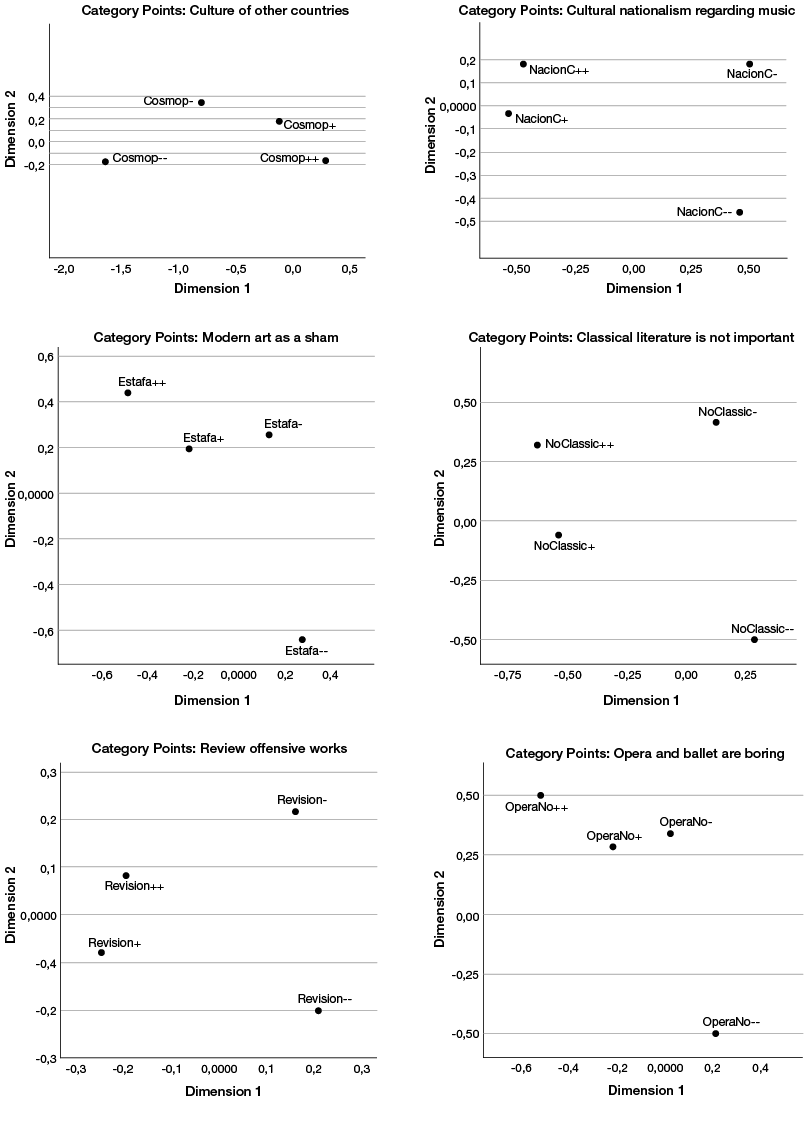
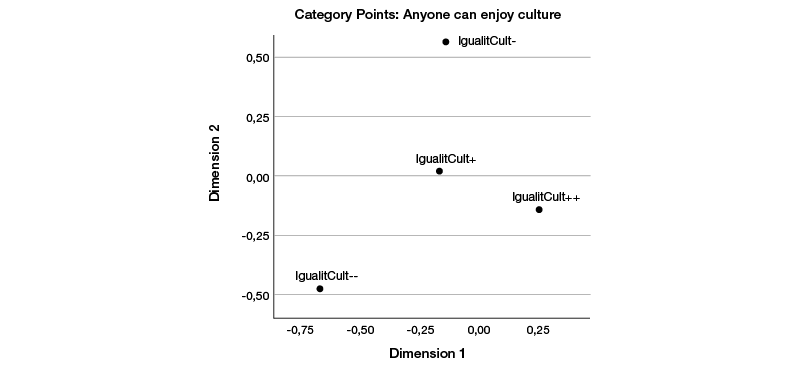
Thus, the article begins by examining whether attitudes toward culture are related to sociodemographic factors (sex, age, education, size of municipality of residence, family income, and occupation) and to political culture (including ideology, religiosity, voting patterns, and political affiliation). To measure attitudes toward culture, the study uses a series of seven questions from the survey: “Could you indicate whether you strongly agree, somewhat agree, slightly agree, or strongly disagree with the following statements?”. 1) I am interested in the customs, culture, and arts of other countries (P18_1), 2) Modern painting is a scam; in many cases a child could do it (P18_2), 3) Overall, I like Spanish music more than foreign music (P18_3), 4) Too much importance is given to classical literature, which does not make much sense in today’s world (P18_4), 5) Artistic works (books, films, etc.) need to be critically reviewed, 6) Going to the opera or to the ballet is boring (P18_6), and 7) Anyone can enjoy art without being an expert (P18_7). The respondent could respond to this battery of questions on a scale of 1 to 4 (in addition to “Don’t know/No comment”), with the value of 1 referring to “Strongly agree”, 2 to “Somewhat agree”, 3 to “Slightly agree” and 4 to “Strongly disagree”. These questions are considered indicators of the following attitudes toward culture:
The labels for the response categories have been recoded to make them more visually understandable in the MCA: Strongly agree (++) / Somewhat agree (+) / Slightly agree (?) / Strongly disagree (??).
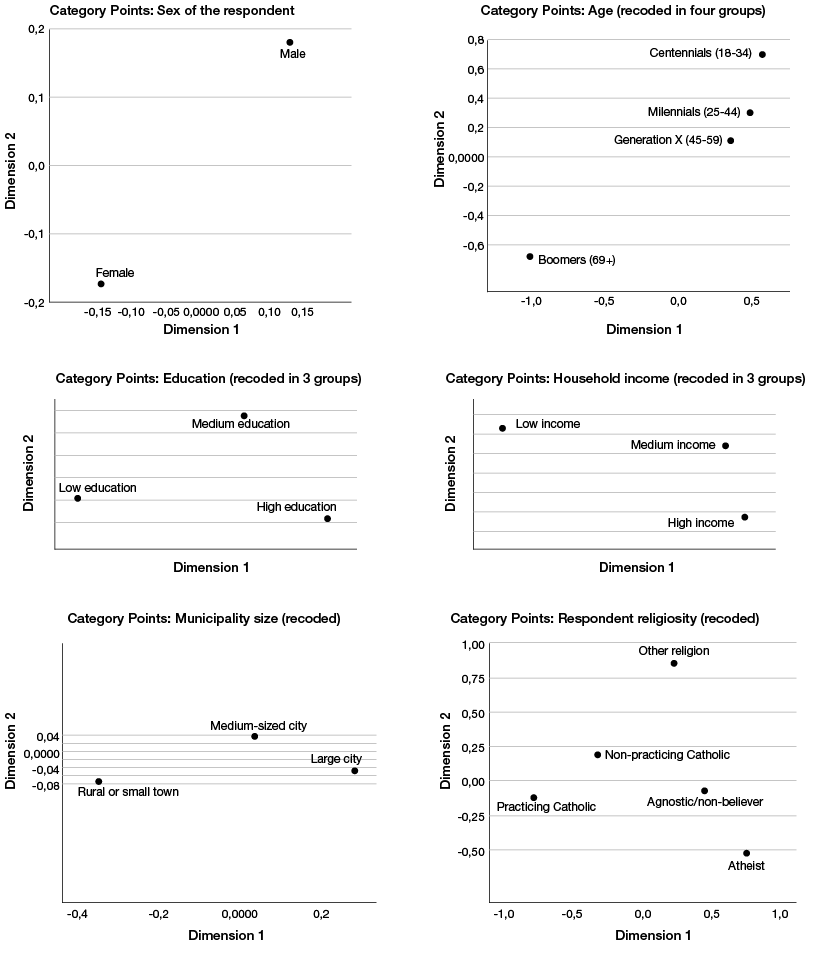
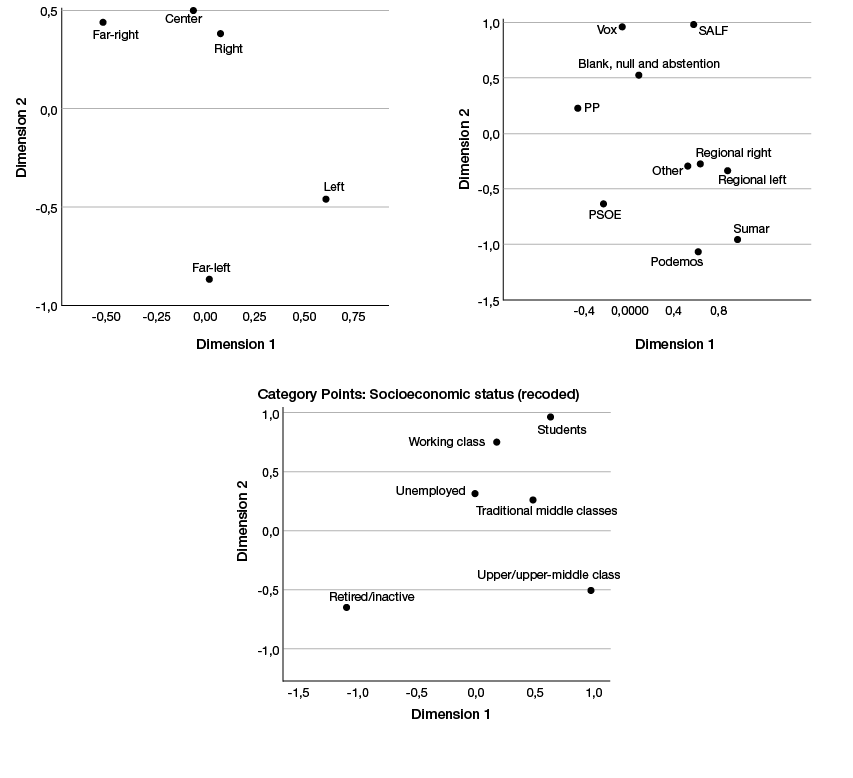
The following sociodemographic variables were used in the MCA: 1) sex, 2) age (recoded into four groups), 3) ideology (recoded into five groups), 4) education (recoded into three groups), 5) household income (recoded into three groups), 6) vote plus sympathy (recoded), 7) municipality size (recoded), and 8) socioeconomic status (recoded). In addition, the battery of seven survey questions (P18) on attitudes toward culture was coded as described in Table 2. The MCA produced two dimensions which, in combination, explain an average of 0.699 of the variance of the variables according to Cronbach’s alpha (see Appendix, Table 3). This is considered an acceptable value.
Analysis of the results
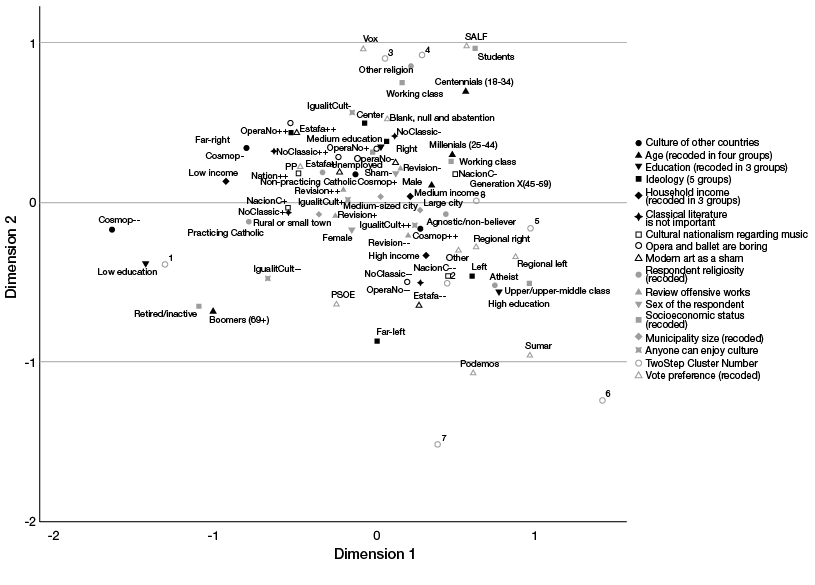
The MCA presents results structured along two axes, Dimensions 1 and 2. At the end of this section, we analyze the category point graphs and the combined category graph. Regarding sociodemographic categories, sex and age, which are grouped into generational cohorts, they are distributed along Dimension 1, with women and older generations located in the lower region and men and younger generations in the upper region, revealing a slight left-to-right gradient. In contrast, educational, economic, and residential categories are structured along Dimension 1 from left to right, with lower education, lower income, and smaller population on the left and higher education, higher income, and larger population on the right. Categories related to ideology and voting are organized along Dimension 2, from top to bottom, with far-right voters and abstainers in the upper region, and left-, center-right, and national/regional left voters in the lower region. Regarding religiosity, the distribution is less clear, with practicing Catholics located in the left region and atheists in the right, aligning more closely with Dimension 1. The socio-professional category is noteworthy, as it reflects not only the type of occupation, but also distinctions between employed, inactive, and unemployed individuals. Students are located in the upper-left region, retirees in the lower-left region, and the upper middle class on the right.
Figure 3 presents all categories together, revealing the affinities between them and the structuring of social space as well as the space of cultural attitudes. On the right side are older people, retirees, and those with less cultural and economic capital, who believe that culture is not equally accessible to everyone. This group is characterized by its marginal position in debates about the classification of culture, consistent with Bourdieu and other scholars’ analyses of the popular classes and their absence from discussions of legitimate forms of culture (Grignon and Passeron, 1989; Mauger, 2023). In contrast, the right and central zones display the greatest homogeneity of characteristics, including age, cultural capital, indifference to religion, and the absence of extreme political positions. This zone is associated with a belief in equality before the law, a more cosmopolitan outlook, a centrist political orientation, and a favorable stance toward the middle classes regarding cultural populism and the defense of cultural legitimacy. In contrast, Dimension 1 reveals two opposing poles. In the lower left region, we find individuals with high cultural and economic capital, low religiosity, left-wing (state or regional) and far-left political orientations, and a favorable attitude toward legitimate and avant-garde culture. Conversely, at the opposite upper right pole is a young, working-class group of students with moderate cultural and economic capital, who clearly reject cultural legitimacy and established canons, while embracing cultural populism, considering contemporary art as a fraud. This space more aligned with the far-right Vox party and, in particular, with Se Acabó la Fiesta (SALF), which exemplifies a new form of hostility toward culture circulating on social media, especially among younger users. This position was not addressed in Bourdieu’s framework, as his analyses were developed in the 1960s and 1970s, when youth tended to shift toward left-wing positions (Bourdieu, 1989). However, other authors have examined it as an emerging phenomenon in the French context (Beaumont, Challier and Lejeune, 2018).
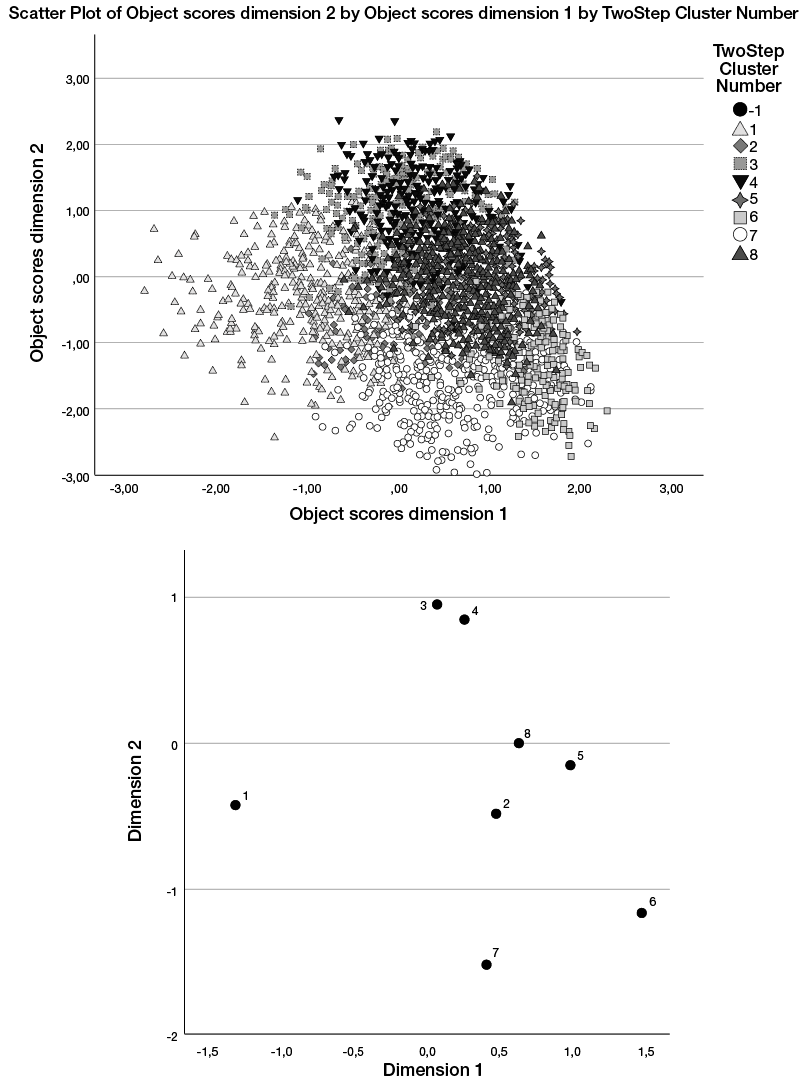
Figure 4 shows the distribution of the groups identified using the two-stage clustering procedure. This distribution was incorporated as a supplementary variable in the MCA to examine its placement and its affinities with the set of categories presented in Figure 3.
In the cluster formation process, the following clusters were identified: Cluster 1 (20.6 %), representing individuals with the lowest economic and cultural capital and most distant from the other clusters. The central clusters, Clusters 2 (6.8 %), 8 (15.8 %), and 5 (6.6 %), occupy middle or upper position in terms of cultural and economic capital and are centrally located with respect to ideological orientation. Respondents on the left and strong supporters of cultural legitimacy, grouped in Clusters 6 (5.9 %) and 7 (9.3 %), occupy the higher end of the cultural capital spectrum. Finally, Clusters 3 (21.5 %) and 4 (13.5 %) together account for more than one-third of the sample. These clusters are characterized by lower cultural and economic capital and by a pronounced hostility toward legitimate culture. In the comparison of means (see Table 5), they are the most likely to agree with statements suggesting that modern painting is a scam and that opera is boring. These clusters, which together represent approximately one-third of the sample, constitute a significant segment of the population that responds to cultural legitimacy through a form of populism that is culturally anti-elitist but politically right-wing. This phenomenon is increasingly visible in Spanish society as well as in other parts of Europe and Latin America (Beaumont, Challier and Lejeune, 2018; Saferstein, 2024).
Conclusions
The contemporary debate on social attitudes toward culture is rooted in discussions dating back to the 19th century, particularly the tension between a civilizational conception of culture and the contrasting view of culture as an expression of the spirit of the people (Elías, 2010). This debate has often been framed in terms of elitism versus cultural populism, or universalism versus cultural nationalism (Cuche, 1999). In the social sciences, it was profoundly reshaped by Pierre Bourdieu’s thesis on the social foundations of cultural taste and the affinities between status groups and their attitudes towards cultural consumption and practices (Coulangeon and Duval, 2013; Mauger, 2023). Since then, numerous theories and empirical studies have suggested a weakening of the relationship between social position and cultural taste (Fernández and Heikkilä, 2011; Peterson and Kern, 1996).
However, since the debates that called for reconsideration of the relationship between legitimism and populism to overcome the oversimplification of attitudes toward culture (Grignon and Passeron, 1989), relatively little progress has been made. As a result, there have been few contributions examining attitudes toward culture and, in particular, the relationship between ideological factors and the acceptance or rejection of cultural legitimacy. The analysis of Survey 3476 on Culture and Lifestyles, conducted in 2024 (CIS, 2024), together with the use of MCA and cluster analysis, makes it possible to identify the main oppositions between different attitudes toward culture and their affinities with sociodemographic and ideological profiles. These results confirm the relevance of some aspects of Bourdieu’s scheme linking cultural and economic capital to positions toward culture, while also highlighting some significant differences.
In 21st century Spain, we observe the persistence of groups on the periphery of cultural life, while others adhere in varying degrees to cultural goodwill, alongside staunch defenders of cultural legitimacy, as described by Bourdieu in Distinction (Bourdieu, 1991). As educational and socioeconomic levels increase, greater value is found to be attached to the cultural canon, manifestations of high culture, cultural nationalism, and a more egalitarian view of access to culture. An apparent paradox emerges by which those having the highest level of cultural capital (whose socioeconomic positions are most closely tied to this capital) tend to adopt more left-leaning and secular ideological positions and to defend the cultural sphere more coherently and consistently against critical or relativistic attitudes toward the cultural canon. Simultaneously, these individuals tend to perceive culture as something accessible to all. Similar logic was observed in France, where the new middle classes, associated with professions requiring educational accreditation and knowledge manipulation, tend to align with centrist or left-wing political positions. This tendency can be interpreted through Bourdieu’s framework, which highlights the homology between social positions characterized by high levels of cultural capital and these political positions and cultural legitimist attitudes (Beaumont, Challier and Lejeune, 2018).
However, Bourdieu’s scheme does not allow us to interpret two new dimensions. First, there is the emergence of a new type of cultural populism characteristic of intellectuals or politicians who present themselves as representatives of “authentic popular culture” (Grignon and Passeron, 1989). Second, a new type of populism emerges, distinct from that of the 19th and 20th centuries. This form persists among less educated sectors and older generations, but it is also present in younger cohorts with secondary education who reject cultural legitimacy and goodwill. These groups embrace a discourse associated with the extreme right, are hostile to cultural institutions, and view the cultural sphere as a battleground for politics and values (Rius-Ulldemolins and Verdenelli, 2025).
Thus, we observe a new type of cultural populism. It is expressed in critical responses to the manifestations of avant-garde high culture or the cultural canon, particularly among younger generations, men, and groups more closely associated with the right and, in particular, the far right. This pattern suggests that the phenomenon cannot be fully explained by a traditional logic of taste or by the interplay of cultural and political attitudes. Instead, factors such as expectations of career advancement are based on economic capital (or in emerging areas such as the digital realm which extend beyond the scope of this work), may be reshaping attitudes toward culture. Therefore, Bourdieu’s framework should be updated to consider these new forms of social structuring and attitudes toward culture. According to Bourdieu (1991), in the 1960s, debates on culture and cultural legitimation reflected the homology between a crisis of the educational institution and the crisis of late Fordism. They were expressed as a struggle to expand the forms of legitimation to new professions and ways of accessing cultural capital (Bourdieu, 1989). Today, however, there is a rising polarization of attitudes toward culture and the will of a sector to undermine cultural institutions and professions in a shift toward right-wing authoritarian populism (Bonet and Martín, 2020; Rius-Ulldemolins and Verdenelli, 2025).
It is too early to determine the medium- and long-term effects of these transformations on the relationship between the cultural sphere, the political field, and cultural practices. We can, however, affirm that these changes lie at the heart of contemporary social and political debates, in which the postwar consensus, including in the cultural sphere, reflects profound social restructurings that must be understood within their national specificities. At the same time, comparative research is needed to grasp their structural significance from an international perspective. Among these points of consensus was the view of the artistic sphere as a legitimate institution and a pathway to social mobility. This consensus (never unanimous, but historically broad) is now fracturing across large sectors of society. As a result, public support for cultural spending is being delegitimized (Rubio-Arostegui and Rius-Ulldemolins, 2023), posing a challenge for policymakers, who must seek new means of engaging younger generations have become very distanced from and hostile toward high culture since the end of World War II.
Annex
TABLE 3. Category frequencies for the analyzed variables
|
Variable |
Category |
Valid percentage |
|
Sex of the respondent |
Male |
50.7 % |
|
|
Female |
49.3 % |
|
Ideology (5 groups) |
Far-left |
20.8 % |
|
|
Left |
22.6 % |
|
|
Center |
23.5 % |
|
|
Right |
14.4 % |
|
|
Far-right |
18.8 % |
|
Education (recoded in 3 groups) |
Low education |
14.6 % |
|
|
Medium education |
58.2 % |
|
|
High education |
27.2 % |
|
Household income (recoded in 3 groups) |
Low income |
19.2 % |
|
|
Medium income |
64.5 % |
|
|
High income |
16.2 % |
|
Vote preference (recoded) |
PSOE |
28.5 % |
|
|
PP |
19.9 % |
|
|
Vox |
7.5 % |
|
|
Regional left |
3.4 % |
|
|
Regional right |
1.7 % |
|
|
Podemos |
3.5 % |
|
|
Other |
3.1 % |
|
|
Blank, null and abstention |
24.9 % |
|
|
Sumar |
6.1 % |
|
|
SALF |
1.4 % |
|
Municipality size (recoded) |
Rural or small town |
22.8 % |
|
|
Medium-sized city |
60.6 % |
|
|
Large city |
16.5 % |
|
Respondent religiosity (recoded) |
Practicing Catholic |
15.6 % |
|
|
Non-practicing Catholic |
35.7 % |
|
|
Other religion |
4.6 % |
|
|
Agnostic/non-believer |
27.9 % |
|
|
Atheist |
16.2 % |
|
Socioeconomic status (recoded) |
Upper/upper-middle class |
18.6 % |
|
|
Traditional middle classes |
19.7 % |
|
|
Working class |
20.3 % |
|
|
Retired/inactive |
27.7 % |
|
|
Students |
4.2 % |
|
|
Unemployed |
9.5 % |
|
Culture of other countries |
Strongly agree |
53.3 % |
|
|
Somewhat agree |
35.9 % |
|
|
Slightly agree |
9.2 % |
|
|
Strongly disagree |
1.6 % |
|
Modern art as a sham |
Strongly agree |
15.6 % |
|
|
Somewhat agree |
19.2 % |
|
|
Slightly agree |
33.6 % |
|
|
Strongly disagree |
29.7 % |
|
Spanish music preference |
Strongly agree |
23.7 % |
|
|
Somewhat agree |
24.7 % |
|
|
Slightly agree |
31.5 % |
|
|
Strongly disagree |
18.6 % |
|
Too much importance on classical literature |
Strongly agree |
7.7 % |
|
|
Somewhat agree |
14.2 % |
|
|
Slightly agree |
39.7 % |
|
|
Strongly disagree |
35.2 % |
|
Need to review offensive works |
Strongly agree |
21.3 % |
|
|
Somewhat agree |
23.7 % |
|
|
Slightly agree |
26.8 % |
|
|
Strongly disagree |
26.7 % |
|
Opera and ballet are boring |
Strongly agree |
8.2 % |
|
|
Somewhat agree |
13.5 % |
|
|
Slightly agree |
35.9 % |
|
|
Strongly disagree |
39.8 % |
|
Anyone can enjoy art |
Strongly agree |
44.4 % |
|
|
Somewhat agree |
37.2 % |
|
|
Slightly agree |
13.7 % |
|
|
Strongly disagree |
3.6 % |
Source: Author’s own creation.
TABLE 4. Summary of the multiple correspondence analysis model
|
Dimension |
Cronbach’s Alpha |
Variance accounted for |
|
|
Total (Eigenvalue) |
Inertia |
||
|
1 |
0.724 |
3.115 |
0.195 |
|
2 |
0.594 |
2.256 |
0.141 |
|
Total |
5.371 |
0.336 |
|
|
Mean |
0.669a |
2.686 |
0.168 |
Note: a. Mean Cronbach’s Alpha is based on the mean Eigenvalue.
Source: Author’s own creation.
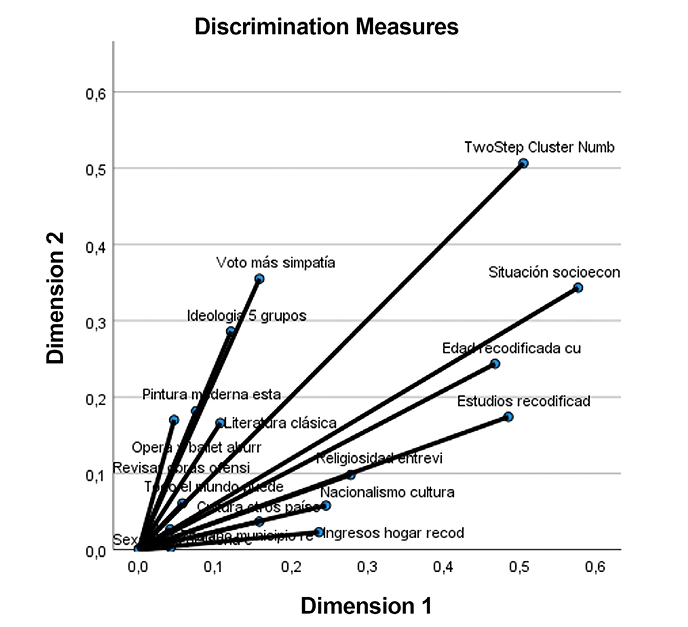
FIGURE 5. Discriminant measures in multiple correspondence analysis
Source: Author’s own creation.